
Your Business Needs a Virtual CTO Before It’s Too Late
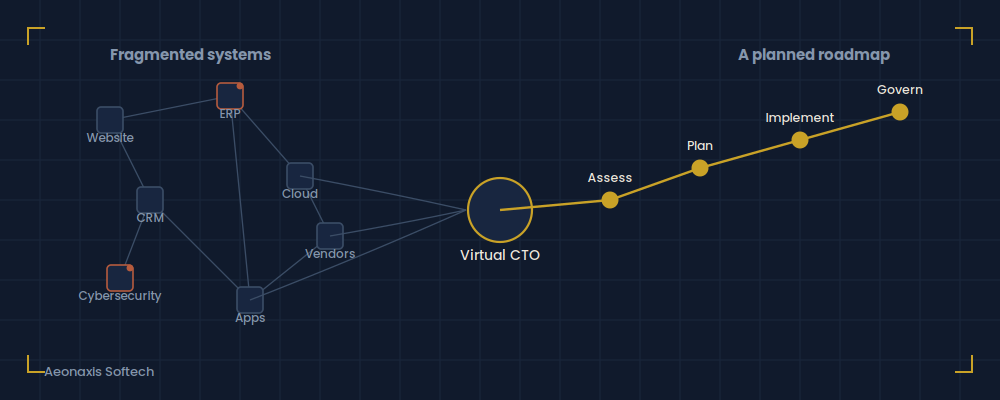
As businesses grow, technology gradually becomes part of almost every important decision. What may have started with a website, accounting software, a few computers and basic IT support can eventually turn into a complex technology environment involving ERP, CRM, cloud platforms, cybersecurity, business applications, data, automation tools, websites, mobile applications and multiple technology vendors. The problem is that many growing businesses continue managing this complexity without anyone responsible for looking at technology from a strategic business perspective. The owner or senior management ends up making technology decisions whenever a problem occurs—whether it is selecting software, evaluating a vendor, dealing with cybersecurity concerns, approving infrastructure expenses or deciding whether a business process should be automated. This reactive approach can become expensive and risky over time. A Virtual CTO, or Fractional CTO, provides businesses with experienced technology leadership without requiring the cost of hiring a full-time Chief Technology Officer. Instead of simply fixing IT problems, a Virtual CTO looks at the bigger picture: what technology the business currently has, what is working, what is creating inefficiencies, what risks exist, where money is being unnecessarily spent and what technology investments can support future growth. They can help management create a technology roadmap, evaluate software and vendors, improve cybersecurity practices, guide technology projects, identify automation opportunities and ensure that technology investments are aligned with business objectives. For a growing company, this independent technology guidance can be particularly valuable because the cost of making the wrong technology decision can be far greater than the cost of getting the right advice in the first place. A Virtual CTO therefore becomes a strategic technology partner who helps management make informed decisions before small technology issues turn into expensive business problems.
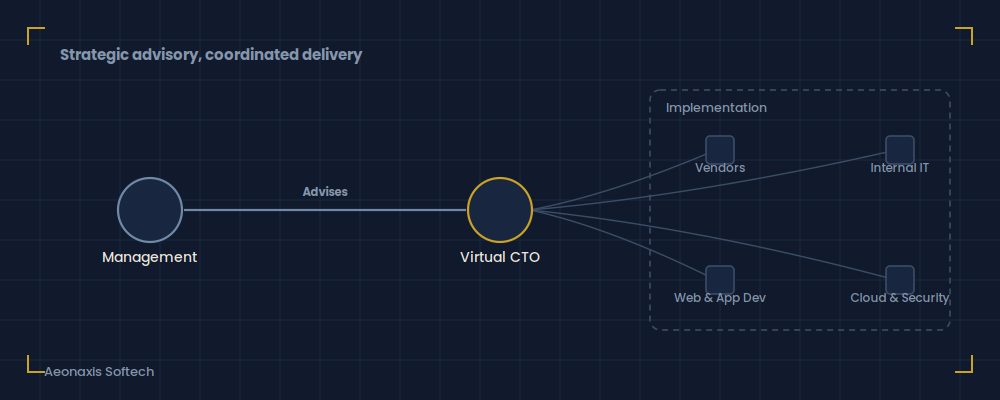
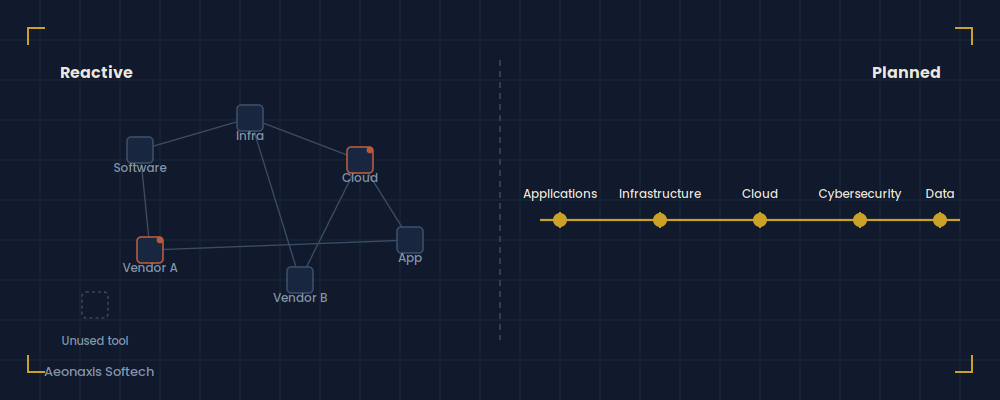 One of the biggest advantages of having a Virtual CTO is the ability to move from reactive technology management to planned technology growth. Many businesses purchase software because a vendor recommends it, upgrade infrastructure because something stops working, adopt cloud services without understanding the long-term cost, or implement applications without properly defining business requirements. Over time, this can create disconnected systems, duplicate data, unnecessary subscriptions, security gaps and technology projects that take longer or cost more than originally expected. A Virtual CTO brings an independent management perspective to these decisions. Before recommending a new system, they can understand the business requirement, compare available options, evaluate vendors, review technical proposals and help management understand the long-term implications of the investment. They can also establish a technology roadmap covering areas such as applications, infrastructure, cloud, cybersecurity, data management, automation and future digital initiatives. This becomes increasingly important when a business is working with multiple external technology providers. A Virtual CTO can act as the bridge between management and those vendors, ensuring that business requirements are properly communicated and that technology projects remain aligned with agreed objectives. The role can also extend to reviewing existing IT operations, monitoring technology risks, guiding internal IT teams and identifying processes where automation or AI could improve productivity. Importantly, a Virtual CTO does not necessarily replace an internal IT team or technology vendors. Instead, the CTO provides strategic direction and governance while internal employees and specialist vendors handle implementation and operational work. For businesses that are not yet ready to employ a full-time CTO, this model can provide access to senior technology expertise on a flexible basis. The result is a more structured approach to technology—where decisions are made based on business priorities, scalability, security, cost and measurable value rather than simply responding to the next IT problem that appears.
Choosing a Virtual CTO is not simply about finding someone who understands technology; it is about finding a technology partner who can understand your business, communicate with management and translate business objectives into practical technology decisions. This is where Aeonaxis Softech can support growing businesses through a Virtual CTO and technology consulting approach. With experience across custom web and mobile application development, business automation, cloud and IT infrastructure, cybersecurity, AI-driven automation, digital transformation and technology implementation, Aeonaxis can provide a broader perspective than a conventional IT support provider. The objective is not to recommend technology for the sake of technology, but to help management understand where technology can solve real business problems and where an investment may not be necessary. Aeonaxis can help businesses assess their existing technology environment, review software and technology vendors, define technology roadmaps, evaluate new applications, oversee development projects, identify automation opportunities, strengthen technology governance and coordinate implementation when required. This also creates an important advantage for businesses that need both strategic advice and execution support. If a technology assessment identifies the need for a new application, automation solution, cloud implementation, cybersecurity improvement or digital platform, the implementation can be planned as a separate project rather than being automatically bundled into the advisory relationship. This keeps the technology advisory role focused on the client’s business interests while giving the business access to an experienced technology implementation team when required. A Virtual CTO should ultimately help business owners make better technology decisions, reduce avoidable technology risks and create a roadmap for sustainable digital growth. If your business has reached a stage where technology decisions are becoming too important to leave to chance, but hiring a full-time CTO does not yet make commercial sense, consulting with Aeonaxis can be a practical starting point for establishing structured, senior-level technology leadership.




Leave a Reply