
Custom Software vs Off-the-Shelf Software: Which Is Better for Your Business?
Choosing the right software can have a direct impact on your business efficiency, operating costs, customer experience and ability to scale. The decision usually comes down to custom software development versus off-the-shelf software. Off-the-shelf solutions are pre-built products designed to serve a broad range of businesses, while custom software is developed specifically around an organisation’s processes, requirements and objectives. Ready-made software can be attractive because it offers faster implementation, predictable subscription costs and features that are immediately available. However, businesses often have to adjust their processes to match the software rather than having the software work around their processes. Custom software development takes the opposite approach: the technology is designed around the business. This makes it particularly valuable for companies with unique workflows, complex approval processes, multiple departments, specialised reporting requirements or integration needs. The real question, therefore, is not simply whether custom software is better than off-the-shelf software. It is whether your business has requirements that justify building a solution specifically for them. Businesses should evaluate factors such as functionality, scalability, integration, security, ownership, implementation time and total cost of ownership before making a decision. Industry guidance also increasingly frames the choice as a question of business fit rather than simply upfront price.
 Off-the-shelf software can be the right choice when your business has straightforward and standard requirements. Accounting, email, payroll, basic CRM, project management and common collaboration functions are often well served by established SaaS and packaged software products. The major advantage is speed: businesses can usually subscribe, configure the system and start using it without waiting for a development cycle. The problem starts when a company’s processes become more complex or its requirements become a source of competitive advantage. A ready-made application may offer dozens of features, but still fail to provide the one workflow your organisation actually needs. Employees may then rely on spreadsheets, manual data entry, WhatsApp communication, duplicate records or external tools to fill the gaps. Integration with existing ERP, CRM, accounting, inventory, payment or government systems can also become complicated. Custom software development addresses these limitations by allowing functionality, database architecture, user roles, dashboards, APIs and integrations to be designed specifically for the organisation. Custom business software, enterprise software development, business process automation and workflow automation solutions can help companies reduce repetitive manual work and create a centralised technology platform. Custom applications can also be developed in phases, allowing businesses to start with an MVP and add modules as requirements evolve. This is particularly important for growing companies because the software architecture can be planned around future expansion rather than being restricted by a third-party vendor’s product roadmap. At the same time, custom development is not automatically the better option. It requires higher initial investment, proper requirements analysis, experienced developers, testing, deployment and ongoing maintenance. The decision should therefore be based on business value rather than the assumption that custom software is inherently superior.
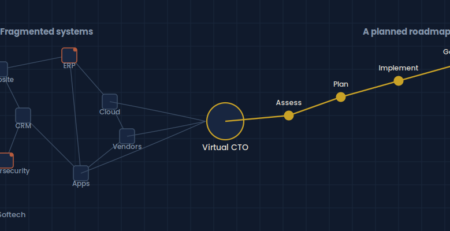
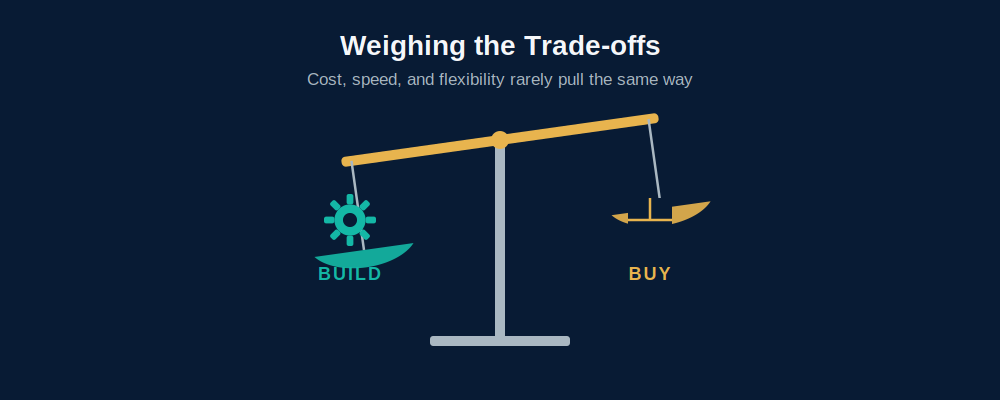 For businesses evaluating custom software development services, the best approach is to compare the complete business case rather than looking only at the initial development cost. If your requirements are standard and an existing product solves them effectively, buying software may be more practical. But if your business depends on specialised processes, requires multiple system integrations, needs complete control over data and workflows, or plans to build technology that differentiates it from competitors, custom software development in India can provide a stronger long-term solution. A professional software development company can begin with business and technical discovery, map existing processes, identify automation opportunities, define the required modules, design the architecture and then develop, test and deploy the application. This can include custom ERP development, CRM development, web application development, mobile application development, API integration, business automation software, AI-powered applications and data analytics dashboards. Security, scalability and maintenance should also be considered from the beginning rather than treated as post-development additions. The growing focus on AI and automation is making this even more important, as businesses increasingly want software that connects data, workflows and intelligent automation instead of operating as isolated applications. At Aeonaxis Softech, businesses can work with a technology partner to analyse their requirements and determine whether an existing platform, a customised solution or a combination of both is the most practical option. The objective should not be to build software simply because custom development is possible. The objective should be to create scalable custom software solutions that reduce operational inefficiencies, improve productivity, integrate with existing systems and support measurable business growth. If your current software forces your team to constantly create workarounds, manually transfer data or compromise on important processes, it may be time to evaluate whether a custom software development company can build a solution that actually fits the way your business operates.



Leave a Reply