

Beyond ChatGPT: How AI Agents Are Transforming Business Operations in 2027
Most businesses first met artificial intelligence through a chat window. You type a question, a tool like ChatGPT answers, and you copy the result into your own work. It is useful, but it is also where most of the effort still sits with you. In 2027, the conversation has moved on. Leaders are now asking a different question: what if the AI did not just answer, but actually completed the task? That is the promise of AI agents, and it is why so many companies are searching for an AI agent development company that can turn the idea into a working system. This guide explains what AI agents are, how they differ from ChatGPT and traditional automation, where they create real value, and how to introduce them safely into your organisation.
What Are AI Agents and How Do They Work?
An AI agent is software that uses an AI model to pursue a goal on its own. Instead of waiting for a prompt after every step, it can plan a sequence of actions, use connected tools, check the result, and continue until the job is done. A chatbot tells you how to process a refund. An agent reads the request, checks the order in your system, applies your refund policy, updates the record, and drafts the reply to the customer, escalating to a person when the case is unclear.
Most AI agents are built from four parts:
- A reasoning model: a large language model that interprets instructions and decides what to do next.
- Tools and integrations: connections to your CRM, ERP, email, databases, calendars and internal applications, so the agent can act rather than only advise.
- Memory and context: access to approved company knowledge such as policies, product data and past records.
- Guardrails and oversight: rules, permissions and approval steps that keep the agent within safe limits.
The last two parts matter most in business. An agent that cannot reach your systems is only a chatbot, and an agent without guardrails is a risk. Good AI agents for businesses are designed around both from the start.
ChatGPT vs AI Agents vs Traditional Automation
These three approaches are often confused, yet they solve different problems. Traditional automation follows fixed rules. ChatGPT-style assistants generate language on request. AI agents combine reasoning with action across your systems.
| Feature | Traditional automation | ChatGPT-style assistant | AI agent |
|---|---|---|---|
| How it works | Fixed if-then rules | Responds to prompts | Pursues a goal across multiple steps |
| Handles unstructured input | Poorly | Well | Well |
| Acts in your systems | Yes, within set rules | Usually no | Yes, through connected tools |
| Adapts to exceptions | Breaks or stops | Suggests options | Reasons about the case, escalates when needed |
| Best suited to | Stable, predictable tasks | Drafting, summarising, research | Multi-step workflows with judgement |
The point is not that one replaces the others. Rule-based automation is still the cheapest and most reliable choice for simple, stable processes. Assistants are excellent for individual productivity. Agents earn their place where a process involves reading messy information, making small decisions and touching several systems. Many successful projects combine all three, which is what business process automation looks like in practice today.
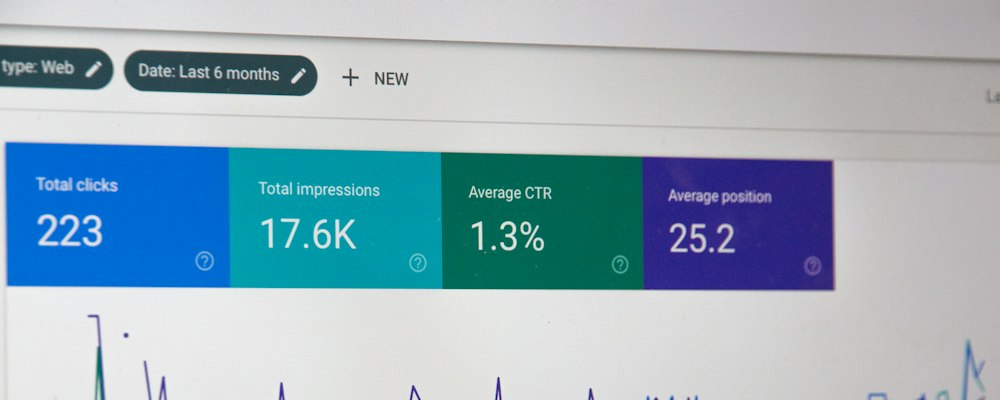
How AI Agents Are Transforming Business Operations
The strongest results come from applying agents to workflows that are repetitive, text-heavy and spread across several tools. Common areas include the following.
Customer support and service
Agents can triage incoming tickets, retrieve order or account details, resolve routine requests and prepare accurate draft replies. Human agents then focus on complex or sensitive cases instead of sorting the inbox.
Sales and lead management
An agent can capture enquiries, enrich lead records, score them against your criteria, schedule follow-ups and update the CRM. Sales teams spend more time speaking to buyers and less time on data entry.
Finance and back-office operations
Invoice matching, expense checks, purchase order handling and report preparation all involve reading documents and moving data between systems. Agents can prepare these items for review, flagging mismatches for a person to approve.
HR and internal operations
From answering policy questions to coordinating onboarding tasks and leave approvals, agents can reduce the routine requests that fill HR and admin inboxes.
Reporting and decision support
Instead of waiting for a weekly spreadsheet, managers can have an agent pull data from several sources, summarise changes and highlight exceptions that need attention.
Practical Applications Across Industries
The same building blocks apply differently depending on the sector. These are example scenarios of where agents can fit, not reports of specific client results.
- Retail and e-commerce: order-status handling, returns processing, product-data updates and inventory alerts.
- Logistics and distribution: shipment tracking updates, delivery exception handling and document checks.
- Professional services: proposal drafting from approved templates, time-entry reminders and client reporting.
- Education and training: admissions enquiries, schedule coordination and learner support.
- Manufacturing and field operations: maintenance request routing, report capture from mobile devices and supplier follow-ups.

Benefits of AI Agent Implementation
When applied to the right processes, AI workflow automation can bring several practical advantages:
- Time returned to your team: routine steps are handled automatically, so skilled people can focus on judgement, relationships and growth.
- Fewer manual errors: consistent handling reduces re-keyed data, missed follow-ups and duplicated records. If you want to see where manual effort hides in your business, our guide to a practical automation audit is a good starting point.
- Faster response times: customers and colleagues get answers and actions without waiting for someone to pick up the task.
- Scalability: processes can handle higher volumes without a matching increase in manual workload.
- Better visibility: every action can be logged, giving managers a clear record of what was done and why.
The size of these benefits depends on your processes, your data quality and how well the solution is designed. Measure your own baseline before you start so that you can judge the results honestly.
Challenges, Risks and Security Considerations
AI agents are powerful, but they are not magic. A responsible project plans for the following limitations from day one.
Accuracy and oversight
Language models can produce confident but incorrect output. For anything involving money, contracts or customer commitments, build in human approval steps and clear escalation rules.
Data security and privacy
Agents access business data, so permissions must follow the principle of least access. Consider where data is processed and stored, and make sure your approach respects regulations that apply to you, such as GDPR in the UK and Europe, the Privacy Act in Australia or PDPA in Singapore. Seek legal advice for your specific situation.
Integration complexity
Value comes from connecting agents to the systems where work actually happens. Older systems without clean interfaces can make this the hardest part of the project.
Change management
Teams need to understand what the agent does, what it does not do and how to correct it. Adoption fails when people feel automation is happening to them rather than with them.
How to Start Implementing AI Agents in Your Business
A focused, step-by-step approach lowers risk and builds confidence.
- Identify opportunities. List repetitive, rule-influenced tasks that consume time, then rank them by effort and potential impact.
- Choose one pilot process. Pick a contained workflow with clear inputs, clear outcomes and measurable results.
- Prepare data and access. Clean the data the agent will use and define exactly which systems and permissions it needs.
- Design the guardrails. Decide which actions are automatic, which need approval and when a human takes over.
- Build, test and measure. Run the agent alongside your current process, compare results and refine before widening its role.
- Scale gradually. Extend to related workflows once the pilot proves its value.
Why Custom AI Solutions and Integration Matter
Off-the-shelf AI tools are convenient, but they rarely match the way your business actually works. Your approval chains, pricing rules, customer data and compliance needs are specific to you. Custom AI solutions are designed around those realities, and AI integration services connect them to the CRM, ERP, websites and mobile apps you already depend on. This is the same logic behind choosing custom software over off-the-shelf software: the solution fits your process instead of forcing your process to fit the tool.
Agents also work best when they sit on top of solid applications. A well-built web application can give an agent clean data and reliable actions to call, while a mobile application can put agent-assisted workflows in the hands of field staff and customers. Aeonaxis Softech designs and builds these layers, including AI applications and digital agents, so that automation, integration and enterprise AI solutions work together rather than as disconnected experiments.
Choosing an AI Agent Development Company
When you evaluate a partner, look beyond demos. Ask how they identify the right processes, how they handle security and access, how they involve your team, and how they support the solution after launch. A capable partner will be honest about what AI can and cannot do, and will start with a small, measurable project rather than promising to transform everything at once.
Ready to Make Your Business AI-Powered?
Whether you want to automate existing workflows, integrate AI into your applications or develop custom AI agents, Aeonaxis Softech can help turn your business requirements into practical technology solutions.
Contact Aeonaxis Softech to discuss your AI automation requirements.
Conclusion
ChatGPT showed many businesses what AI can say. AI agents show what AI can do: read the request, use your systems, follow your rules and complete the work, with people staying in control of the decisions that matter. Companies that start with a single well-chosen workflow, protect their data and measure the outcome will be best placed to benefit. Intelligent automation is not about replacing your team. It is about removing the routine so your team can do the work only people can do.
Frequently Asked Questions
What is an AI agent?
An AI agent is software that uses an AI model to work towards a goal. It can plan steps, use connected business tools, check results and escalate to a person when needed, rather than only replying to prompts.
How are AI agents different from ChatGPT?
ChatGPT is a conversational assistant that responds to your prompts. An AI agent can take actions across your systems, such as updating records or sending approved messages, and can carry out a multi-step task with limited supervision.
What can AI agents automate in a business?
Typical examples include customer support triage, lead capture and follow-up, invoice and document checks, reporting, scheduling and internal helpdesk requests. They suit tasks that are repetitive, information-heavy and spread across several tools.
Are AI agents safe for sensitive business data?
They can be, if designed properly. This means limiting access to only what the agent needs, logging its actions, adding human approval for high-risk steps and choosing data handling that meets the regulations that apply to your business.
How do I choose an AI agent development company?
Look for a partner that starts by understanding your processes, explains limitations honestly, offers integration with your existing applications, builds in security and oversight, and supports the solution after launch.
Where should a business begin with AI agents?
Begin with one contained workflow that is repetitive and measurable. Run a pilot, compare the results with your current process, and expand only when the value is clear.





Leave a Reply